
Reviewed by Chang Khai Lun
Chang Khai Lun shares his Singapore Grand Prix experience, from the speed on track to the moments beyond it.
Lens
Tamron 16–50mm F2.8 A · Canon RF
Camera
Canon EOS R5 Mark II · APS-C crop mode
Occasion
Singapore Grand Prix 2026
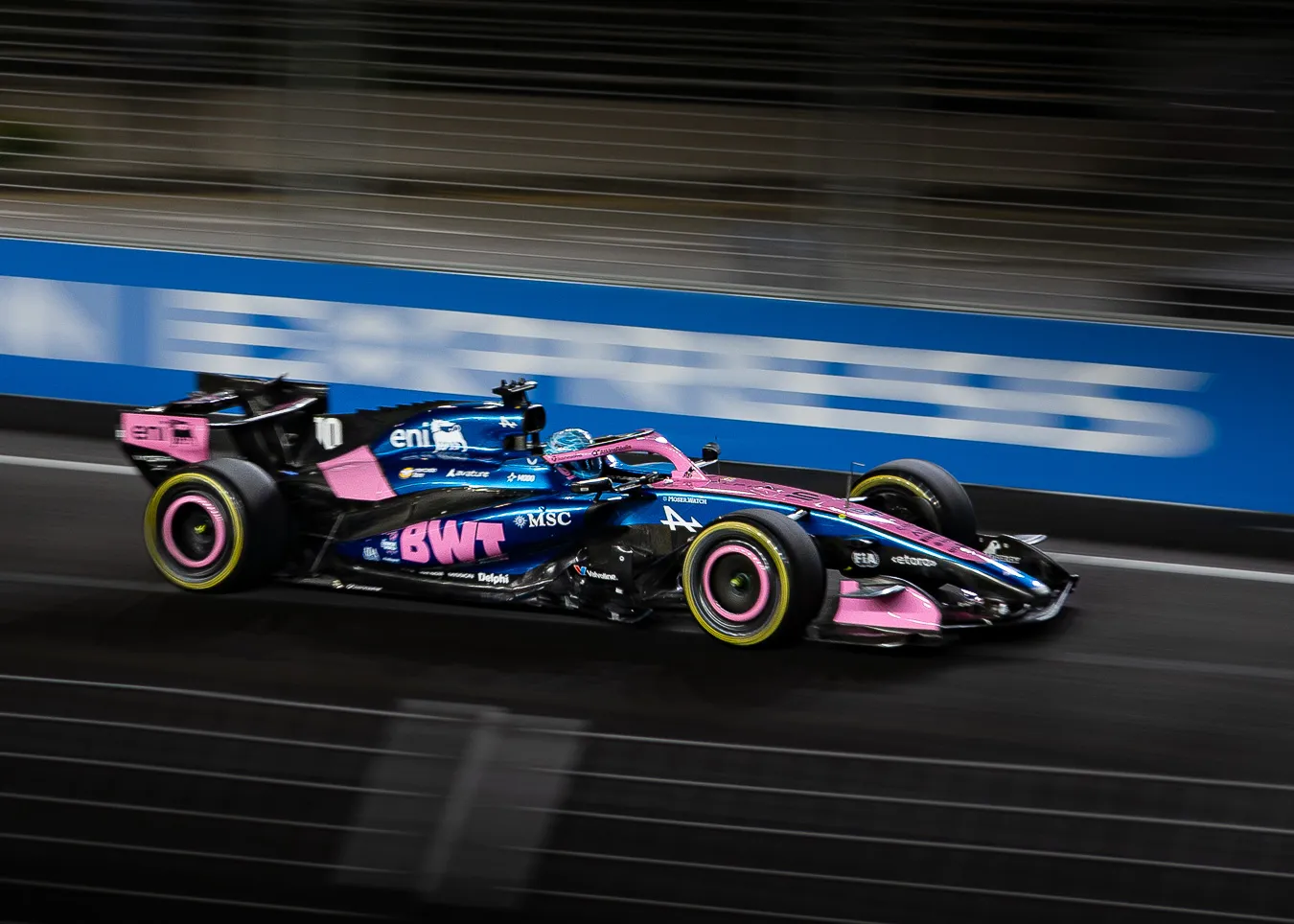
A Formula 1 car sweeps past, its colours briefly distinct against the barriers before the next moment takes over. For Chang Khai Lun, photographing the Singapore Grand Prix 2026 meant finding a way to hold on to that fleeting impression of speed, while also remembering what it felt like to be there.
A hobbyist with a particular interest in motorsport and wildlife, Khai Lun is drawn to photography for a simple reason: memories fade, but photographs remain. At the circuit, his aim was to preserve meaningful moments, whether they unfolded on the track or among the people watching.
For this outing, he paired the Tamron 16–50mm F2.8 A (Model B091) for Canon RF with his Canon EOS R5 Mark II, working in APS-C crop mode. The compact zoom accompanied him through an evening of changing light, lively crowds and cars that left little time to react.
A compact lens for the whole experience
Portability was the first reason Khai Lun chose the 16–50mm F2.8. He wanted a lens that was easy to carry around, and its small size made it comfortable to keep in hand throughout the day. At 305g in Canon RF mount, it added little to the burden of moving between photographs.
On his EOS R5 Mark II in 1.6× crop mode, the zoom provides a field of view equivalent to approximately 25.6–80mm on full frame. Khai Lun gravitated towards the 50mm end for the cars, using that tighter framing to concentrate attention on the action.
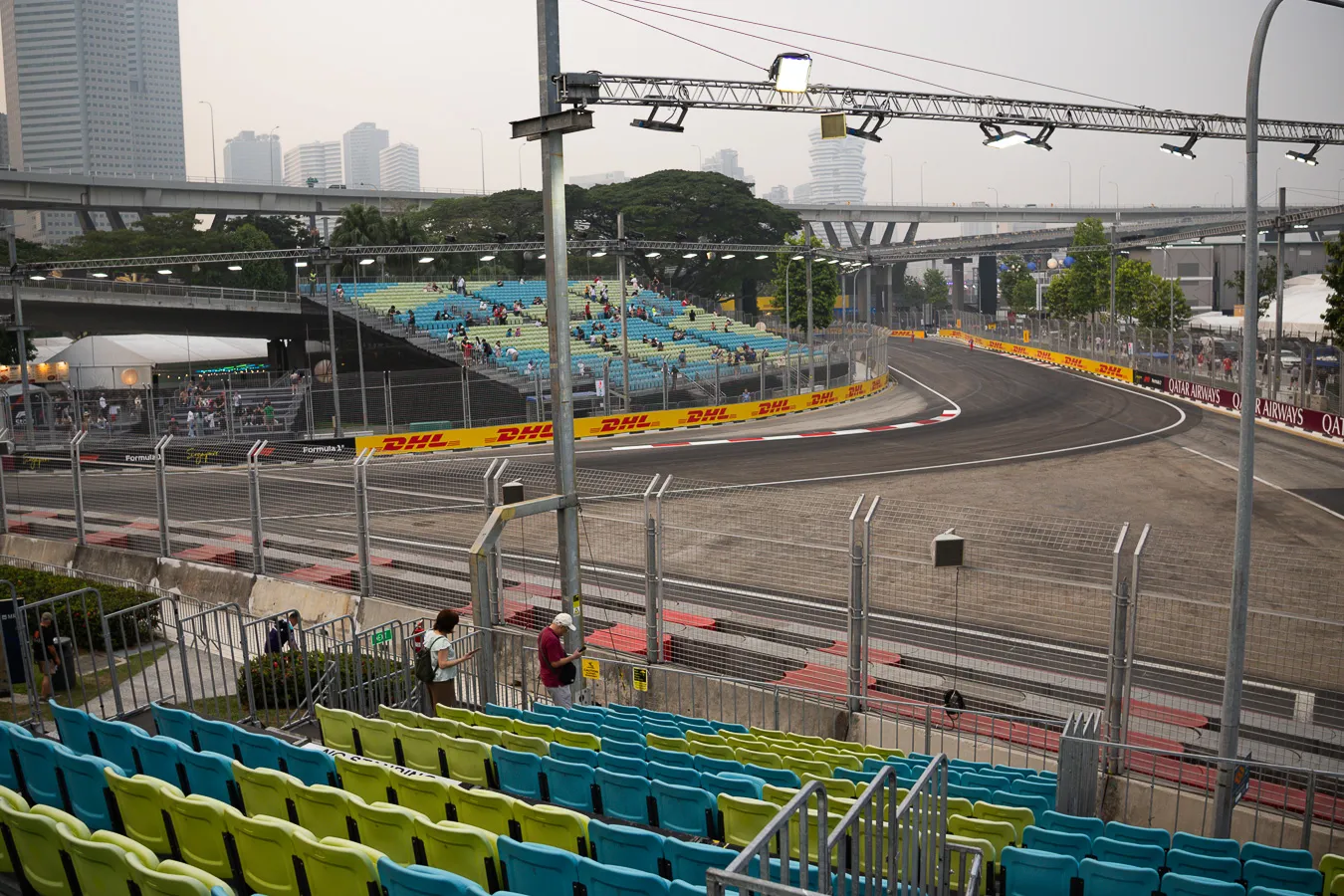
The wider end had a different role. His photographs of the grandstands, entertainment areas and spectators give the racing a setting. Together, those views turn a collection of car photographs into a record of an evening at the Grand Prix.
Keeping pace with the action
The first surprise came when the cars passed the Connaught Grandstand. Khai Lun estimated their speed at around 250km/h, yet found the autofocus faster and more accurate than he had expected. That experience gave him confidence to keep working with a subject that could disappear from the frame almost as quickly as it arrived.
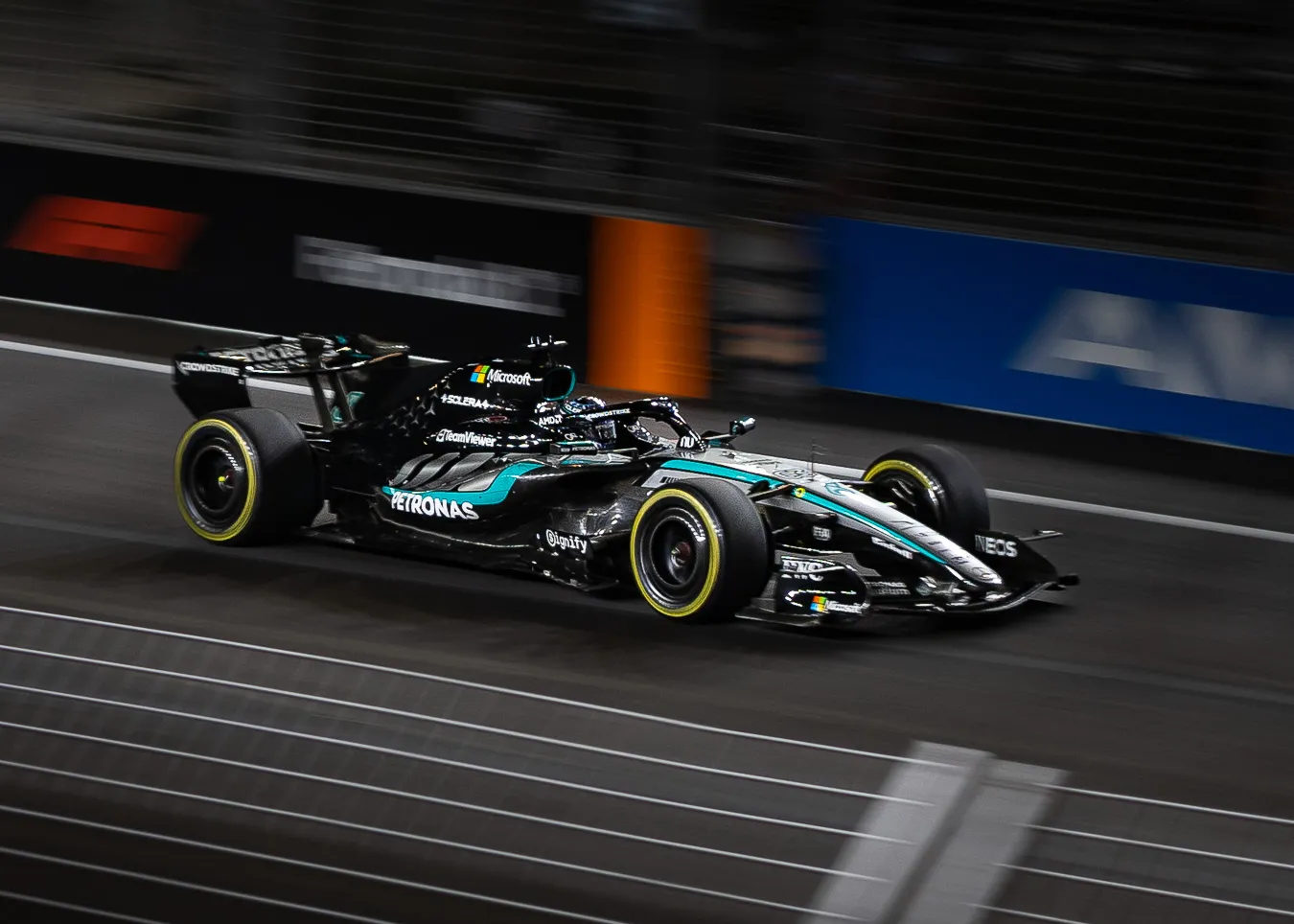
His panning photographs show how that speed can become part of the image. In the Alpine and Mercedes frames, the cars stand out against barriers and fencing drawn into streaks of movement. Both were photographed at 50mm and 1/125 second, preserving a sense of motion around the subject.
Having previously used Tamron’s 18–300mm, he felt the 16–50mm delivered a noticeable improvement in autofocus performance for this outing. His advice after the experience was direct: “Trust the AF.”
From sunset to circuit lights
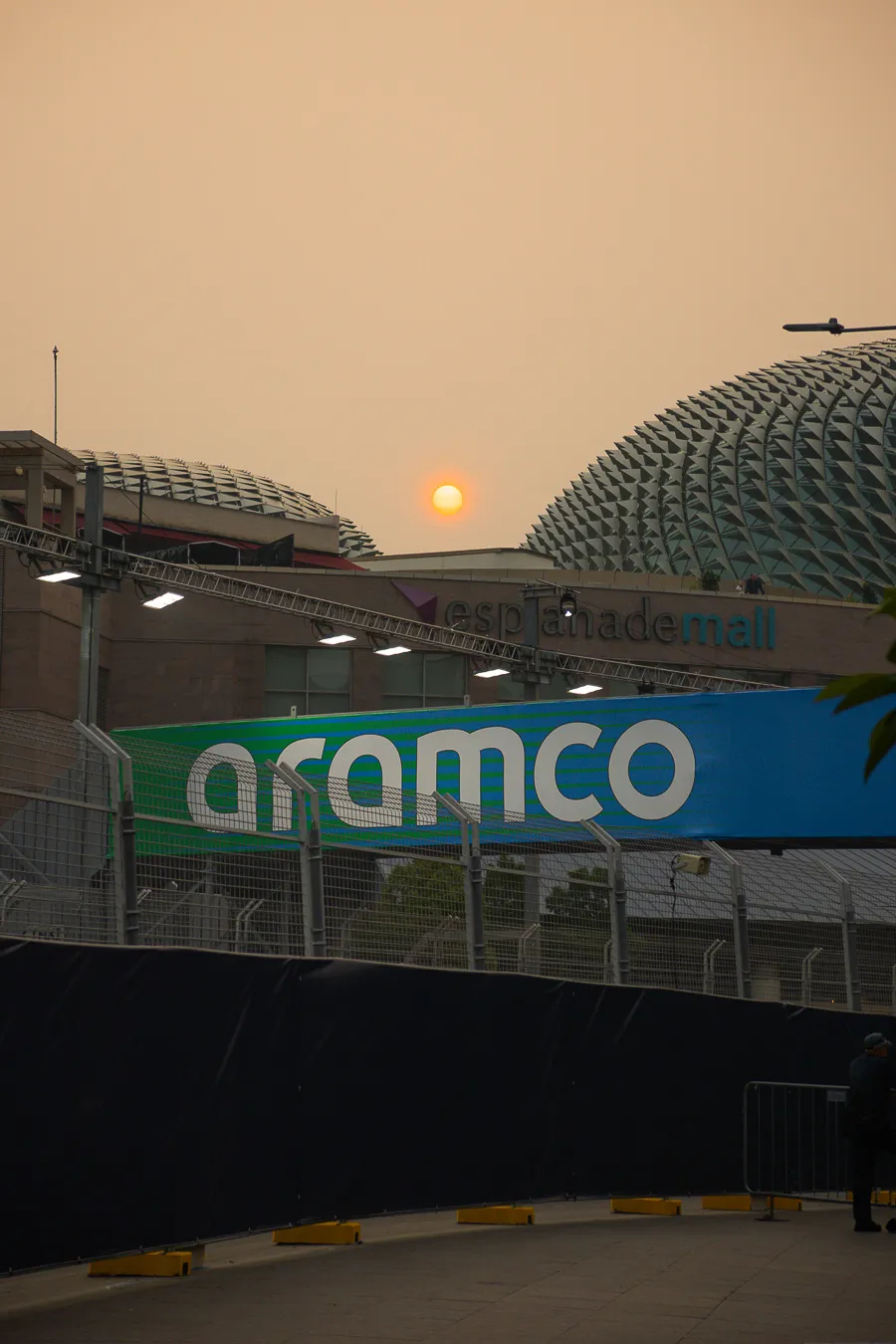
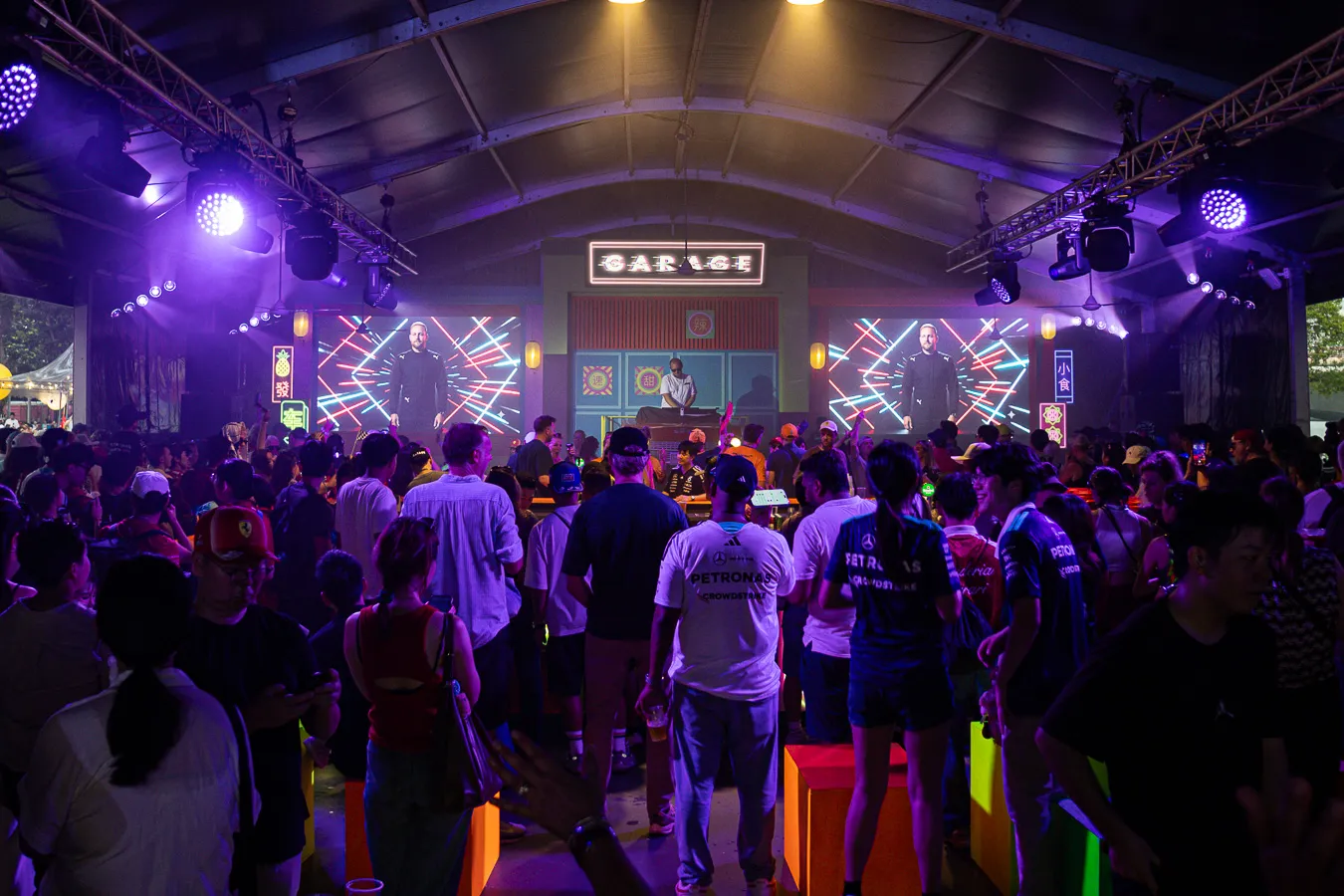
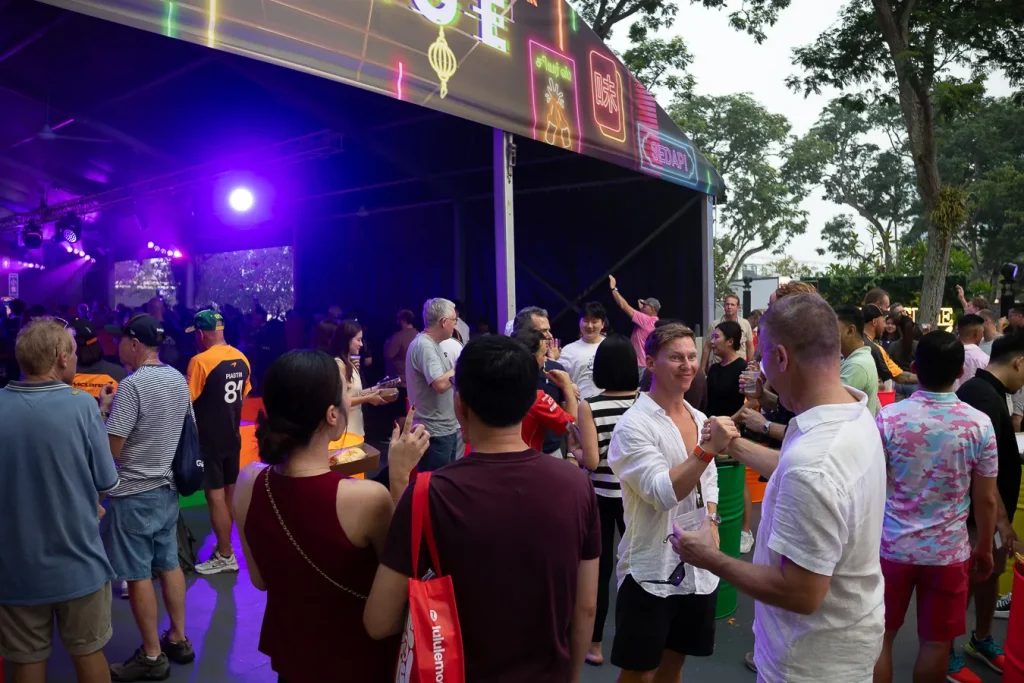
The light changed as the evening progressed. A warm sun above the Esplanade gave way to the purple glow of an entertainment tent and, later, the floodlit circuit. The photographs carry those changes through the story, showing how the event’s character shifted after dark.
Khai Lun found the constant F2.8 aperture useful in the outdoor conditions. When he needed higher ISO settings, he considered the noise in the resulting photographs acceptable. He was also pleased with the sharpness and detail when reviewing his images.
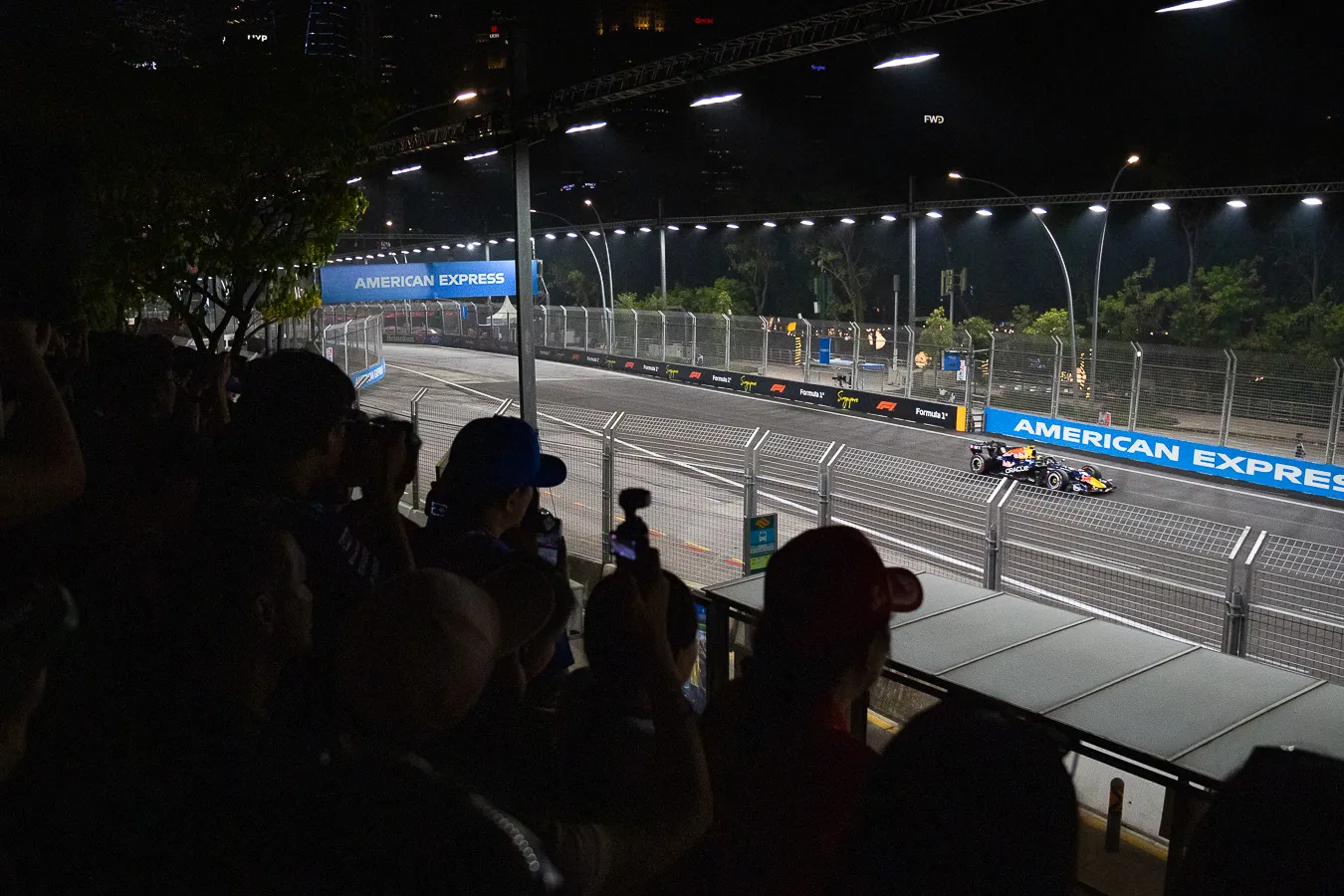
The images reveal different exposure choices within the same evening. The panning frames used relatively low ISO settings, while a wider view of spectators watching the circuit was made at ISO 4000. Across these scenes, the lens remained at F2.8.
The challenge of photographing a favourite driver
Asked which subject meant the most to him, Khai Lun singled out Max Verstappen. He had started following Formula 1 during the 2026 season, and photographing a driver he admired gave the occasion a personal significance.
It also proved especially demanding. Khai Lun felt Verstappen braked later than the other drivers, and said his success rate was lowest when photographing him. That observation stayed with him as part of the challenge of anticipating the action: a familiar stretch of circuit could still produce a difficult frame.
His wider photograph of a Red Bull car passing the spectators offers another perspective on the experience. The people watching remain part of the composition, placing the viewer back in the grandstand rather than separating the car from its surroundings.
The moments beyond the racing
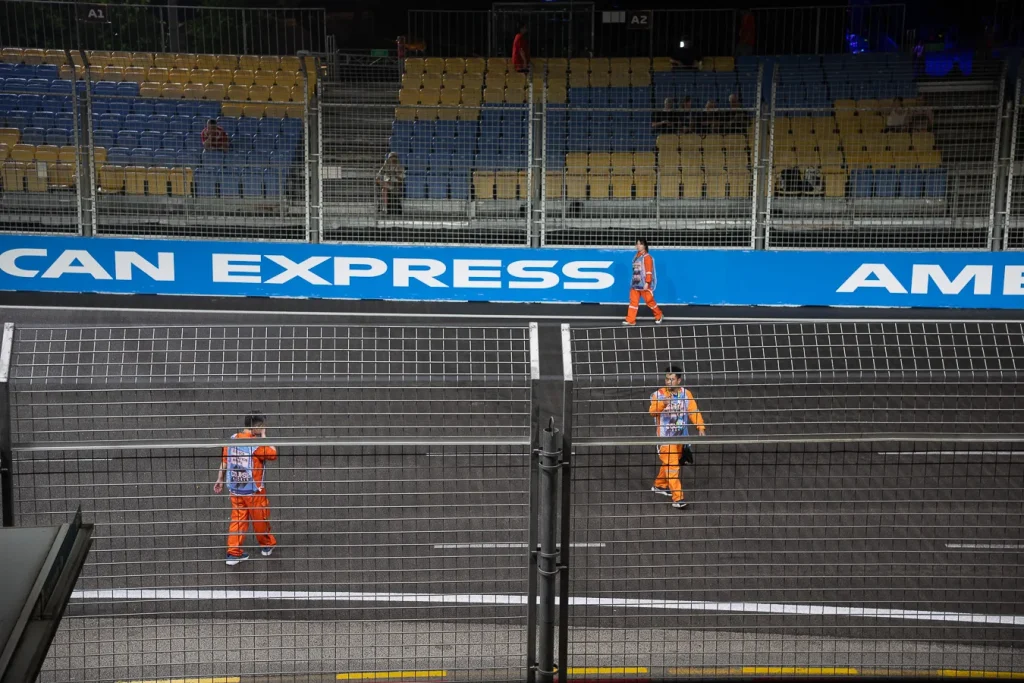
Some of the evening’s quieter photographs sit between the bursts of speed. Marshals in orange stand out against the track and fencing. Fans gather beneath coloured lights. Before nightfall, the circuit curves past rows of blue and green seats.
These images give space to the people and surroundings that make up the occasion. They also reflect Khai Lun’s original intention to capture memories. Years later, the crowd, the light and the view from the seats can be as evocative as a photograph of a car.
A lens he would take along again
Looking back, Khai Lun valued the combination of sharpness, autofocus response and low weight. He did feel the images had a different look from those made with his Canon 24–70mm F2.8, but considered that an acceptable compromise for the Tamron’s size and price.
The experience left him particularly interested in the 16–50mm F2.8 as a travel and street photography lens. Its zoom range suited the variety of scenes he wanted to photograph, and its portability made it easy to keep the camera with him.
At the Singapore Grand Prix, that meant coming home with more than a series of racing photographs. His images follow the evening from sunset to the floodlit track, preserving both the action he had come to see and the atmosphere surrounding it.
“It’s worth it to add into your travel lens list!”
Chang Khai Lun
About Chang Khai Lun
Chang Khai Lun is a photography enthusiast with a particular interest in motorsport and wildlife. He photographs to preserve moments and memories, seeking images that will remain meaningful long after the occasion has passed.
Follow his photography: @changkhailun · @de_artsy
The body: Canon EOS R5 Mark II · APS-C crop mode
The lens: Tamron 16–50mm F2.8 A · Canon RF